
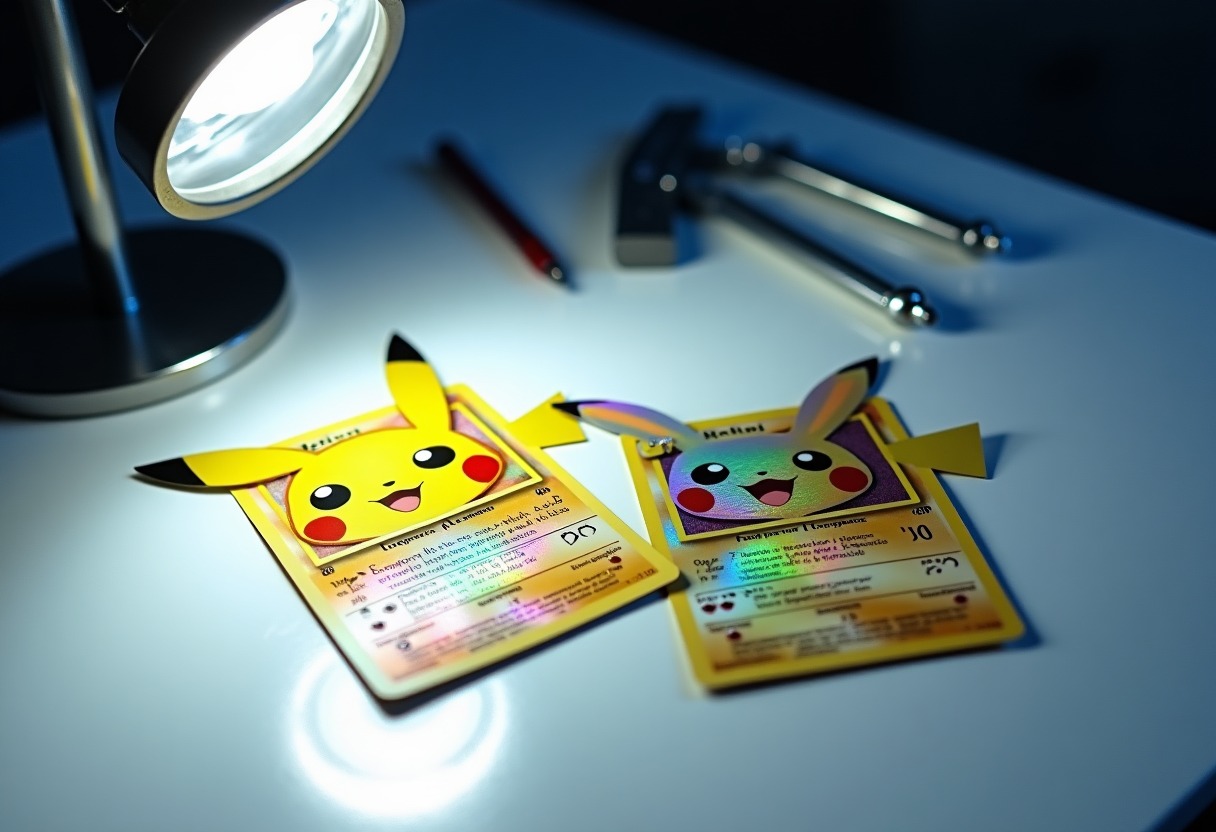
Fake Pikachu cards flood online marketplaces, turning dream deals into expensive disappointments. The counterfeit market has exploded alongside card values, with sophisticated fakes mimicking everything from base set classics to modern chase cards.
Why Fake Pikachu Cards Target Collectors
Pikachu cards command premium prices because they're the franchise mascot and appear in nearly every set. Most Valuable Pikachu Cards regularly sell for hundreds or thousands of dollars, making them prime targets for counterfeiters. The Pokemon Company International has documented increasing counterfeiting operations, particularly targeting high-value cards from the original Base Set and modern alternate art cards.
Counterfeiters typically source from overseas printing facilities using stolen card images and reverse-engineered holographic patterns. They focus on Pikachu because demand remains consistently high across all age groups, from nostalgic millennials chasing childhood memories to new collectors entering the hobby.
Physical Card Authentication Methods
Start with the card's texture and weight. Authentic Pokemon cards use specific cardstock that feels substantial without being thick. Genuine cards have a slight texture when you run your finger across the surface, while fakes often feel either too smooth or have an artificial texture that doesn't match the original printing process.
The Pokemon logo and copyright information provide immediate authentication clues. Authentic cards feature crisp, properly aligned logos with consistent font weights. Fake cards often have blurry logos, incorrect fonts, or misaligned copyright text. Check the set symbol placement and clarity—authentic symbols maintain sharp edges and proper proportions.
Color saturation offers another verification method. Real Pikachu cards display vibrant but balanced colors that don't appear oversaturated or washed out. Counterfeit cards frequently show color bleeding, where inks blur beyond their intended boundaries, or colors that appear artificially bright compared to authentic examples.
Use a → Shop jeweler's loupe 10x on Amazon to examine fine details. Authentic cards show clean printing dots in a consistent pattern, while fakes often display irregular dot patterns or visible printing lines that shouldn't exist on genuine cards.
Holographic Pattern Analysis
Holographic patterns represent the most sophisticated anti-counterfeiting feature on Pokemon cards. Authentic holofoil creates specific light patterns that shift predictably when tilted. The holographic material should appear embedded in the card rather than sitting on top like a sticker.
| Authentication Feature | Authentic Card | Fake Card | |------------------------|----------------|-----------| | Holographic Pattern | Smooth, consistent shifts with geometric patterns | Irregular, rainbow-like patterns or obvious sticker appearance | | Card Thickness | Standard TCG thickness (0.012 inches) | Often thicker or thinner than standard | | Text Clarity | Sharp, properly spaced fonts | Blurry, misaligned, or wrong font styles | | Corner Cutting | Precise rounded corners | Uneven or sharp corners |
Test the holographic authenticity by holding the card under bright light and rotating it slowly. Genuine holofoil creates distinct geometric patterns—stars, circles, or other shapes depending on the set. Fake holo patterns often show generic rainbow effects or patterns that don't match the specific set's authentic holographic design.
A → Shop UV blacklight flashlight on Amazon reveals another authentication layer. Some authentic Pokemon cards contain UV-reactive elements that aren't visible under normal light but glow under blacklight. This feature isn't present on all cards, but when it exists, fakes rarely replicate it correctly.
Essential Authentication Tools for Collectors
Professional authentication requires the right tools. A → Shop Pokemon card magnifying glass on Amazon with 5x-10x magnification lets you examine printing quality, text clarity, and holographic patterns in detail. This level of magnification reveals printing imperfections that indicate counterfeiting.
Digital scales provide another verification method. Authentic Pokemon cards maintain consistent weights within specific ranges. While individual cards can vary slightly due to humidity and manufacturing tolerances, significant weight differences often indicate fake materials or printing processes.
→ Shop card authentication tools on Amazon include specialized gauges for measuring card thickness and flexibility. These tools help identify cards printed on non-standard materials that feel different from authentic cardstock.
Store your authenticated cards in Best Pikachu Card Sleeves Binders to prevent damage and maintain their condition. Proper storage becomes crucial once you've invested time in authentication, as condition directly impacts value for collector-grade cards.
Advanced Detection Techniques
Professional grading companies like PSA, BGS, and CGC use additional authentication methods beyond basic visual inspection. They examine card construction layers under microscopes, use specialized lighting to reveal printing processes, and maintain databases of known authentic card characteristics.
The "bend test" offers a controversial but sometimes necessary authentication method. Authentic Pokemon cards have specific flexibility that allows slight bending without creasing, then return to flat. Fake cards often bend differently due to material composition differences. Only use this test on cards you suspect are fake, as it can damage authentic cards.
Print registration provides another authentication marker. Authentic cards show precise alignment between different colored layers, while fakes often display slight misalignment where colors don't line up perfectly. This appears most clearly in text areas where multiple colors meet.
Smell represents an unusual but effective authentication method. Authentic Pokemon cards have a specific "card smell" from their printing process and materials. Fake cards often smell different due to alternative inks or cardstock materials, though this method requires experience with authentic cards to be reliable.
FAQ
How can I tell if a Pikachu card is fake just by looking at it? Examine the holographic pattern first—authentic cards show specific geometric patterns that shift smoothly when tilted, while fakes often display generic rainbow effects or sticker-like appearances. Check the Pokemon logo and text clarity, as fakes frequently have blurry printing, incorrect fonts, or misaligned elements. The card's color saturation should appear vibrant but natural, not oversaturated or washed out like many counterfeits.
What's the most reliable way to authenticate expensive Pikachu cards before buying? Request detailed, high-resolution photos of the front, back, and edges before purchasing. Use a jeweler's loupe or magnifying glass to examine printing quality, text sharpness, and holographic patterns if buying in person. For high-value purchases, consider buying only graded cards from reputable companies like PSA or BGS, which authenticate cards as part of their grading process. Never rely solely on seller reputation—always verify the card yourself.
Do fake Pikachu cards have the same weight as real ones? Fake cards often weigh differently than authentic ones due to alternative materials and printing processes. Authentic Pokemon cards typically weigh between 1.7-1.9 grams, though this can vary slightly based on the specific set and holographic features. Significant weight differences usually indicate counterfeiting, but you'll need experience handling authentic cards to recognize normal weight ranges. Digital scales accurate to 0.1 grams help identify suspicious weight variations.
Can counterfeit cards pass as real when professionally graded? High-quality counterfeits occasionally fool initial inspections, but professional grading companies use advanced authentication techniques including microscopic examination, specialized lighting, and extensive databases of authentic card characteristics. Reputable grading services maintain strict standards and will not grade cards they cannot verify as authentic. However, the counterfeit quality continues improving, so even graded cards require purchase from trusted sources with proper provenance documentation.
What should I do if I accidentally bought a fake Pikachu card? Contact the seller immediately with evidence of the card's counterfeit nature, including detailed photos highlighting specific authentication failures. Most reputable platforms like eBay offer buyer protection for counterfeit items. Document everything—your purchase, communications with the seller, and evidence of the fake. File disputes through the payment platform if the seller refuses to cooperate. Report the seller to the platform to prevent others from being scammed with the same counterfeit inventory.
Authentic Pikachu cards reward careful collectors who master authentication techniques, transforming what could be costly mistakes into confident acquisitions that hold their value for years.
Some links on this page are affiliate links. We may earn a small commission if you purchase through them, at no extra cost to you.
As an Amazon Associate we earn from qualifying purchases. This article contains affiliate links; if you buy through them we may earn a small commission at no additional cost to you.