
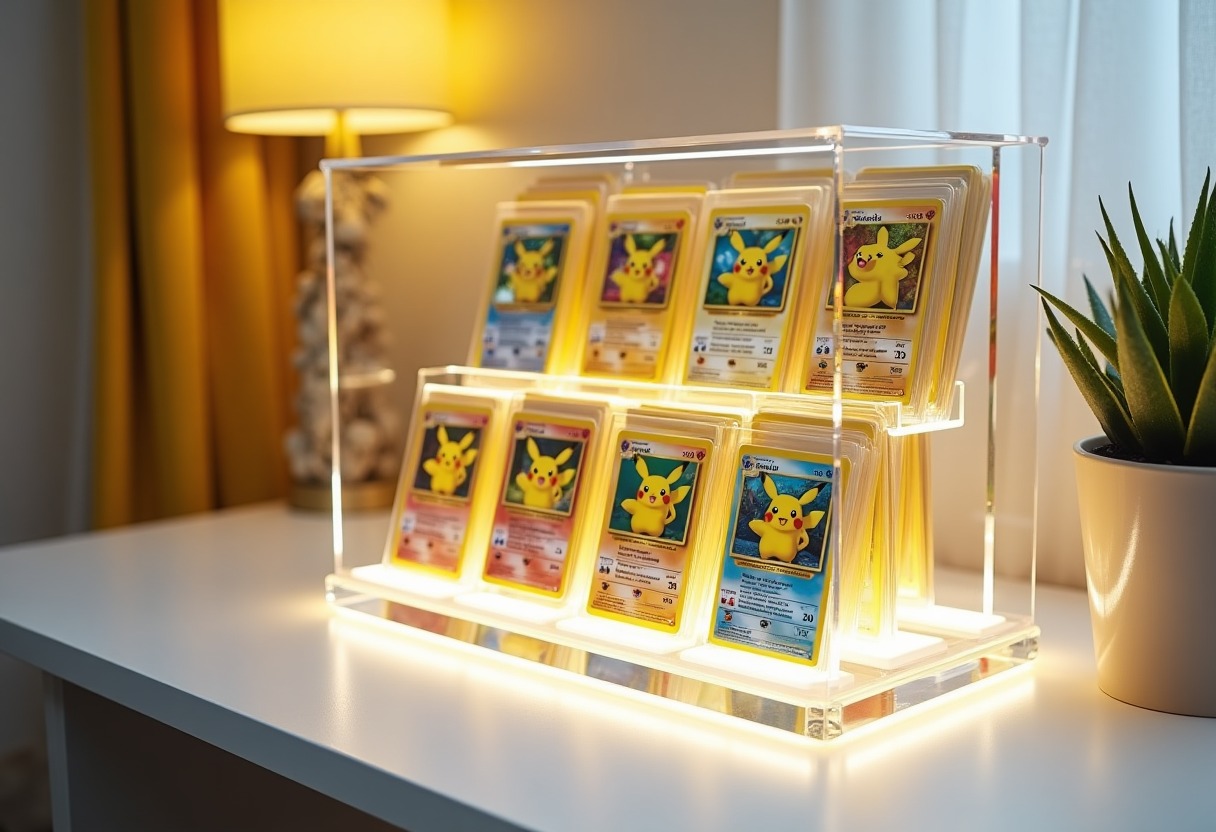
Your prized Pikachu cards deserve better than sitting in a dusty shoebox. The right display transforms your collection from hidden treasure into a celebration of electric mouse perfection that friends and family can appreciate every day.
Why Proper Display and Storage Matters for Pikachu Cards
Card values plummet when collectors neglect protection. According to Pokémon card grading standards, even minor edge wear or surface scratches can drop a card from Mint to Near Mint condition, cutting value by 30-50%. Pikachu cards face extra vulnerability because they're handled more frequently than other cards — that iconic yellow face is irresistible to touch.
Professional storage prevents the three main threats to card condition: UV light fading, moisture damage, and physical wear. Cards stored in direct sunlight can fade within months, while humidity above 60% encourages mold growth that permanently damages card stock. Temperature fluctuations cause cards to expand and contract, creating micro-cracks that worsen over time.
Smart display solutions solve both problems. They showcase your collection's crown jewels while maintaining the pristine condition that keeps valuable cards investment-worthy. A 1998 Pikachu Base Set card graded PSA 10 sells for $5,000+, while the same card in played condition barely reaches $50.
Essential Protection Methods for Every Pikachu Card
Every Pikachu card needs three layers of protection before display: penny sleeves, top loaders, and outer protection. → Shop top loader sleeves on Amazon. This system creates a moisture barrier, prevents scratches, and maintains structural integrity.
Start with penny sleeves — those ultra-thin plastic protectors that slide over cards. Insert cards carefully to avoid air bubbles, which can create pressure points that damage corners over time. The sleeve opening should face away from the top loader opening to prevent double exposure to dust and moisture.
Top loaders provide rigid structure that prevents bending. Choose 35pt thickness for standard cards and 55pt for thicker cards like promotional releases. Semi-rigid holders work for temporary storage, but top loaders offer superior long-term protection for display pieces.
Team bags or card savers add the final protection layer. These prevent top loaders from scratching each other and create additional moisture barriers. Best Pikachu Card Sleeves Binders covers specific product recommendations for different card types and budgets.
UV-protective sleeves cost slightly more but prevent fading that destroys card aesthetics. Cards displayed near windows or under bright lights need this protection — even indirect sunlight contains enough UV radiation to cause noticeable color shifts within six months.
Creative Display Solutions That Showcase Your Collection
Shadow boxes transform individual cards into wall art. Choose frames with 1-2 inch depth to accommodate protected cards without pressure. Position cards at slight angles using acid-free mounting foam to create visual interest while ensuring air circulation around each card.
Rotating displays keep collections fresh and protect cards from constant light exposure. Monthly rotations prevent UV damage while letting you enjoy different cards throughout the year. Most Valuable Pikachu Cards can help you decide which cards deserve permanent display versus rotation spots.
Tiered acrylic stands create museum-quality presentations for desktop collections. → Shop acrylic card stands on Amazon. Multiple tiers let you display 6-12 cards in the space normally needed for 2-3, making them perfect for showcasing evolution lines or different Pikachu artwork styles.
Illuminated display cases add drama while controlling light exposure. LED strips with adjustable brightness let you highlight specific cards for photos while dimming for everyday display. Choose warm white LEDs (3000K) to enhance card colors without harsh blue tones that can cause eye strain during extended viewing.
Storage and Display Comparison Guide
| Storage Method | Best For | Protection Level | Cost Range | Display Value | |----------------|----------|------------------|------------|---------------| | Card Binders | Large collections (100+ cards) | Medium | $15-50 | Low-Medium | | Display Boxes | Organized storage with easy access | High | $20-80 | Low | | Shadow Boxes | Individual showcase pieces | Very High | $25-100 | Very High | | Acrylic Cases | Desktop displays (5-20 cards) | High | $30-150 | High |
Binders work best for large collections where you want to flip through cards regularly. Nine-pocket pages accommodate standard protection while letting you organize by set, rarity, or personal preference. However, binders hide cards most of the time and offer limited display value.
Display boxes provide excellent protection for cards you access frequently but don't need to showcase. They're perfect for storing playsets of tournament cards or seasonal rotation pieces. → Shop card storage boxes on Amazon.
Shadow boxes excel for highlighting individual special cards like PSA-graded pieces or especially meaningful pulls. They're conversation starters that turn single cards into room focal points.
Acrylic cases balance display appeal with practical access. They're ideal for collections you want to see daily while maintaining easy reorganization options.
Product Recommendations for Every Collection Size
For Beginner Collectors (Under 50 cards): Ultra Pro 9-pocket binder with side-loading pages prevents cards from falling out while flipping. → Shop card storage boxes on Amazon. Add BCW top loaders for your favorite 5-10 cards.
For Growing Collections (50-200 cards): BCW card storage boxes with dividers let you organize by set or type while maintaining easy access. Pair with Ultra Pro deck boxes for your most valuable 20-30 cards that deserve individual protection.
For Serious Collectors (200+ cards): Combination approach using binders for bulk storage and multiple display cases for showcase pieces. → Shop trading card display cases on Amazon. This lets you enjoy your collection while keeping everything organized and protected.
For Investment-Grade Cards: Professional grading through PSA or BGS, followed by specialized graded card storage boxes or individual display cases. Graded cards need different storage solutions due to their slab size and value.
For Theme Displays: Acrylic step displays work perfectly for showcasing Pikachu evolution themes or chronological artwork progression. → Shop binder pages on Amazon for organized storage of themed subsets.
Advanced Display Techniques Most Collectors Miss
Lighting angles dramatically affect card visibility and photography. Position lights at 45-degree angles to minimize glare while highlighting foil patterns and texture details. Avoid direct overhead lighting, which creates harsh shadows that hide card artwork.
Backdrop selection influences perceived card value. Neutral colors (black, white, or gray) make cards appear more professional and valuable. Busy patterns or bright colors compete with card artwork and cheapen the overall presentation.
Humidity control prevents warping that ruins display aesthetics. Silica gel packets in enclosed displays maintain 45-55% humidity — the sweet spot that prevents both mold growth and brittleness. Replace packets every 3-6 months depending on climate conditions.
Card rotation schedules prevent sun damage while keeping displays interesting. Create a rotation calendar that moves cards between display and storage every 2-3 months. This system lets you enjoy your entire collection while ensuring no single card receives excessive light exposure.
Documentation enhances both organization and value. Photograph your collection regularly and maintain acquisition records. This information proves authenticity for insurance claims and helps track condition changes over time. Many collectors discover previously unnoticed damage through systematic photography.
Frequently Asked Questions
Should I remove cards from display cases for conventions or trades? Only remove cards from protective cases when absolutely necessary, and prepare a clean workspace with microfiber cloths and replacement protection ready. Handle cards by edges only, and re-sleeve immediately after examination. Consider bringing duplicate images for initial discussions to minimize handling of original cards.
How often should I clean my display cases and check card condition? Clean acrylic surfaces monthly using microfiber cloths and alcohol-free cleaners to prevent chemical damage to nearby cards. Inspect card conditions quarterly, looking for color changes, edge wear, or moisture spots that indicate environmental issues. Document any changes with photos for insurance and condition tracking purposes.
What's the best way to display both English and Japanese Pikachu cards together? Group cards by artwork or release era rather than language to create cohesive visual themes that highlight artistic evolution. Use consistent protection methods across languages, but consider slightly larger top loaders for Japanese cards, which sometimes use different dimensions than English releases. Label displays with acquisition dates or set information to provide context for visitors.
Can I display cards in rooms with fluctuating temperatures like basements or attics? Avoid areas with temperature swings greater than 10 degrees Fahrenheit, as repeated expansion and contraction weakens card fibers and can cause micro-cracks in protective cases. Basements often have humidity issues, while attics experience extreme heat that accelerates card deterioration. Choose climate-controlled rooms with consistent 65-75°F temperatures for valuable displays.
How do I photograph my displayed Pikachu cards for social media without damaging them? Use natural light from north-facing windows or soft LED panels positioned at 45-degree angles to minimize glare while highlighting card details. Never use camera flash, which can cause UV damage and creates harsh reflections that obscure card features. Take photos through protective cases rather than removing cards, and consider using polarizing filters to reduce glare from foil surfaces.
Your Pikachu collection tells the story of your passion — make sure that story shines through displays that honor both the cards and the memories they represent.
Some links on this page are affiliate links. We may earn a small commission if you purchase through them, at no extra cost to you.
As an Amazon Associate we earn from qualifying purchases. This article contains affiliate links; if you buy through them we may earn a small commission at no additional cost to you.