
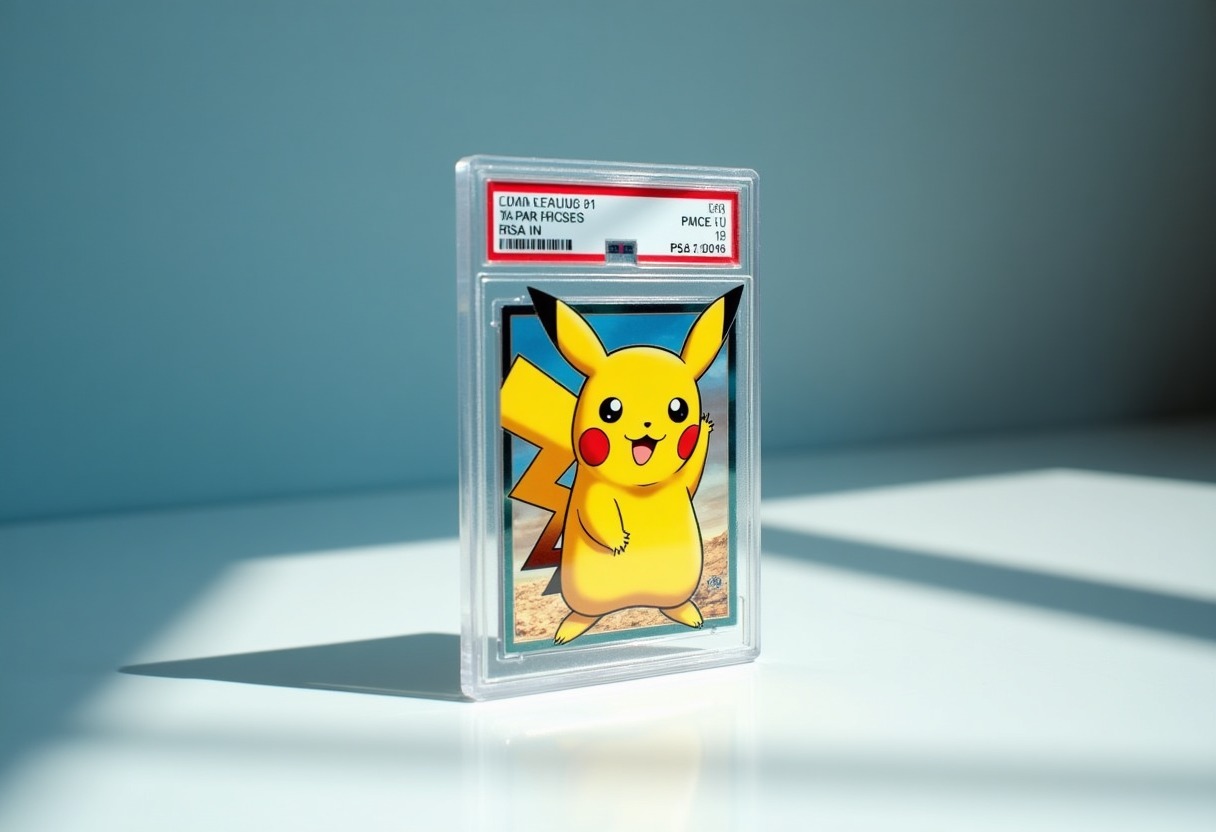
That pristine Base Set Shadowless Pikachu sitting in your collection could be worth $500 graded versus $50 raw — but only if you choose the right grading company and submit it properly. Grading transforms valuable Pikachu cards into authenticated, protected investments that command premium prices among collectors worldwide.
Why Pikachu Card Grading Matters More Than Ever
The explosion in Pokémon card values since 2020 has made grading essential for serious collectors. According to Bulbapedia, Pikachu remains the most collected and valuable character across all Pokémon generations, making properly graded examples highly sought after.
Professional grading provides three critical benefits: authentication against counterfeits, condition assessment on a standardized 1-10 scale, and protective encapsulation that preserves long-term value. For iconic Pikachu cards like the Base Set Shadowless, Japanese Base No Rarity, or modern chase cards like Pikachu VMAX Alt Art, grading can multiply values by 5-10x over raw condition.
The grading premium exists because collectors pay significantly more for certified condition and authenticity. A PSA 9 Base Set Shadowless Pikachu consistently sells for $400-600, while the same card ungraded might fetch $80-120. That math makes grading worthwhile for cards worth $50+ in raw condition.
Understanding PSA vs BGS for Pikachu Cards
PSA (Professional Sports Authenticator) and BGS (Beckett Grading Services) dominate the Pikachu grading landscape, but they serve different collector needs and market segments.
PSA uses a simple 1-10 numerical scale and currently charges $25-50 per card depending on declared value and turnaround time. Their population reports show exactly how many cards exist at each grade level, creating scarcity premiums for high-grade examples. PSA 10s typically command the highest market prices for vintage Pikachu cards, especially Base Set and Jungle releases.
BGS employs four sub-grades (centering, corners, edges, surface) that combine into an overall grade, with pristine BGS 10 Black Label cards representing the absolute pinnacle. BGS charges $20-40 per card with similar value tiers to PSA. The sub-grades help collectors understand exactly why a card received its grade, making BGS popular for modern Pikachu cards where condition differences matter greatly.
For card sleeves and toploader protection before submission, invest in proper storage to maintain card condition during the grading process.
PSA vs BGS Comparison for Pikachu Collectors
| Factor | PSA | BGS | Best For | |--------|-----|-----|----------| | Vintage Premium | Higher prices for 9s and 10s | Lower vintage premiums | Base Set, Jungle, Fossil Pikachu | | Modern Cards | Strong but lower than BGS | Higher premiums for 9.5+ | V/VMAX, Alt Arts, Promos | | Population Control | Detailed pop reports | Less detailed reporting | Investment-focused collectors | | Turnaround Time | 30-90 days standard | 45-120 days standard | Quick flippers vs patient collectors | | Sub-grades | None | Four detailed sub-grades | Understanding condition factors | | Market Recognition | Highest overall recognition | Strong but PSA-dominated vintage | Resale considerations |
Essential Pikachu Cards Worth Grading
Focus grading efforts on cards that show meaningful value increases in graded form. Base Set Shadowless Pikachu (#25) represents the gold standard — PSA 9 examples sell for $400-600 while PSA 10s reach $1,000-2,000. The Japanese Base Set No Rarity Pikachu performs similarly, with high grades commanding massive premiums.
Jungle Pikachu offers more affordable grading opportunities, with PSA 9s selling for $150-250. The yellow cheek error variant adds another premium layer for completionist collectors.
Modern chase cards justify grading when pulled fresh from packs. Pikachu VMAX Alt Art from Vivid Voltage shows strong graded premiums, especially in BGS 9.5+ condition. Promo cards like the 25th Anniversary Classic Collection Pikachu also perform well graded, as collectors seek perfect examples for display.
For comprehensive card protection, check out our guide to the Best Pikachu Card Sleeves Binders for proper storage solutions.
Skip grading on heavily played vintage cards, unlimited Base Set Pikachu under $30 raw value, or modern cards that don't show clear premiums. The grading cost rarely justifies the return on these examples.
Pre-Submission Card Inspection and Preparation
Successful grading starts with honest condition assessment using proper tools. Quality magnifying glasses reveal edge wear, surface scratches, and centering issues that determine final grades.
Examine centering first — measure border widths with rulers to ensure 60/40 or better ratios for high grades. Check corners under magnification for any white showing or rounded edges. Run fingertips gently across the surface to detect scratches or indentations that cameras miss.
Clean cards gently with microfiber cloths to remove fingerprints or dust, but never use liquids or abrasive materials. Document any flaws with high-resolution photos for your records before submission.
Store cards in penny sleeves and rigid toploaders immediately after inspection. Handle only by edges and work on clean, flat surfaces to prevent accidental damage.
Consider the holographic foil patterns on vintage Pikachu cards — scratches in the holo significantly impact grades. Surface quality often determines whether cards achieve that crucial PSA 9 vs PSA 8 grade difference.
Advanced Grading Strategies Most Collectors Miss
Submission timing affects both cost and turnaround. Both PSA and BGS offer bulk submission discounts for members submitting 20+ cards. Collectors can coordinate group submissions through local card shops or collecting communities to access these rates.
Population reports reveal grading opportunities. Cards with low pop counts in high grades often command premiums. Check PSA and BGS population data before submitting to understand rarity levels at different grades.
Consider crossover grading for undergraded cards. A BGS 9 Base Set Pikachu might grade PSA 9.5 or 10, capturing additional value. Both companies accept competitors' slabs for crossover attempts, though success rates vary.
Submission forms and tracking help organize large submissions. Document declared values accurately — undervaluing risks inadequate insurance while overvaluing increases fees unnecessarily.
Multiple card submissions of the same type can reveal grading consistency. Submit 2-3 copies of the same card in similar condition to understand how each company grades that specific issue.
For broader collecting context, explore our Most Valuable Pikachu Cards guide to identify the best grading candidates in your collection.
FAQ
How much does it cost to grade a Pikachu card with PSA or BGS?
PSA charges $25-50 per card depending on declared value and service level, while BGS charges $20-40 with similar tiers. Both companies require membership fees ($99-199 annually) and minimum submission quantities. Factor shipping costs ($15-30) and insurance into total expenses. The basic service levels work fine for most collectors, with express options adding $50-100+ per card for faster turnaround. Always declare realistic values — too low risks inadequate insurance coverage while too high increases grading fees unnecessarily.
Should I grade unlimited Base Set Pikachu or only shadowless versions?
Grade shadowless Base Set Pikachu first, as they consistently show the highest premiums in graded form. PSA 9 shadowless examples sell for $400-600 while unlimited versions typically reach $80-150 in PSA 9 condition. The shadowless variant commands roughly 3-4x higher prices across all grades due to its earlier print run and collector preference. Grade unlimited copies only if they're truly mint condition (PSA 9+ potential) and you got them at low cost. Focus grading budget on shadowless, Japanese Base Set, and other premium variants first.
How long does it take to get Pikachu cards graded and returned?
Standard service levels take 30-90 days for PSA and 45-120 days for BGS, though actual turnarounds often exceed estimates during busy periods. Express services cost significantly more but reduce wait times to 10-20 business days. Both companies provide tracking updates throughout the process, from receipt confirmation to grading completion. Plan submissions around major releases or holidays when volume spikes cause delays. Economy services can stretch 6+ months but offer the best value for lower-value cards where time isn't critical.
What condition does my Pikachu card need to be worth grading?
Cards should show realistic PSA 8+ potential to justify standard grading costs. This means sharp corners with minimal white showing, good centering (70/30 or better), clean edges without visible wear, and surfaces free from major scratches or indentations. Minor edge wear or slight centering issues can still achieve PSA 8-9 grades depending on overall presentation. Heavily played cards with creases, stains, or significant damage rarely grade high enough to recoup costs. When in doubt, compare your card against sold listings of graded examples to gauge realistic grade expectations and value potential.
Which grading company gives higher values for vintage Pikachu cards?
PSA consistently commands higher market premiums for vintage Pikachu cards, especially Base Set, Jungle, and other WOTC-era releases. PSA 9 and 10 vintage Pikachu cards often sell for 20-40% more than equivalent BGS grades due to stronger collector recognition and preference in the vintage market. However, BGS Black Label 10s (perfect sub-grades) can exceed PSA 10 prices when they occur. For modern cards like V/VMAX or Alt Arts, BGS 9.5 and 10 grades often match or exceed PSA premiums. Choose PSA for vintage cards focused on maximum resale value, BGS for modern cards or when you want detailed sub-grade feedback on condition factors.
Transform your Pikachu collection from hobby to investment by grading the cards that matter most — the iconic Base Set classics and modern chase cards that define generations of collectors.
Some links on this page are affiliate links. We may earn a small commission if you purchase through them, at no extra cost to you.
As an Amazon Associate we earn from qualifying purchases. This article contains affiliate links; if you buy through them we may earn a small commission at no additional cost to you.